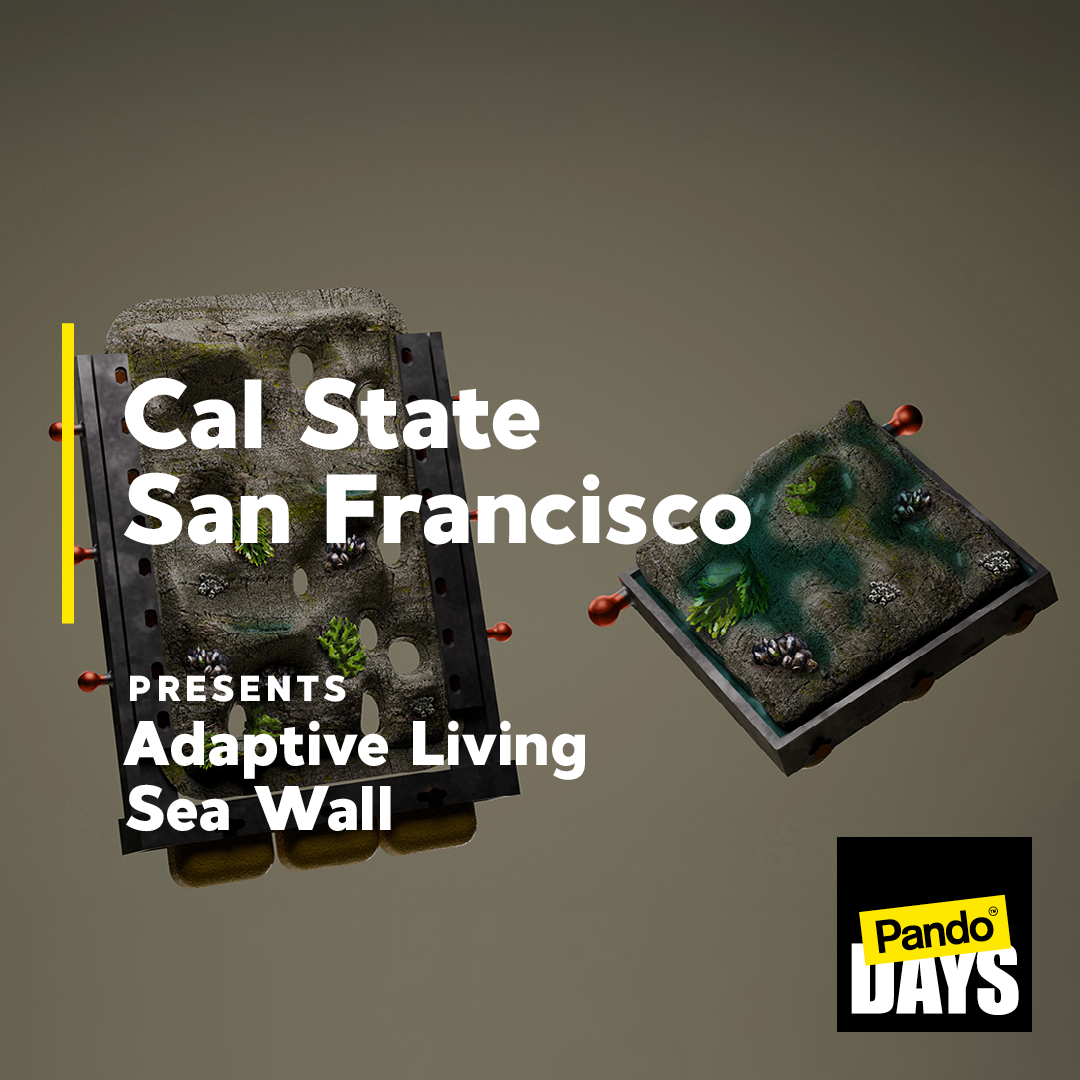
California State University, San Francisco presents
Adaptive Living Seawall
Turning Coastal Infrastructure into Ecological Habitat.
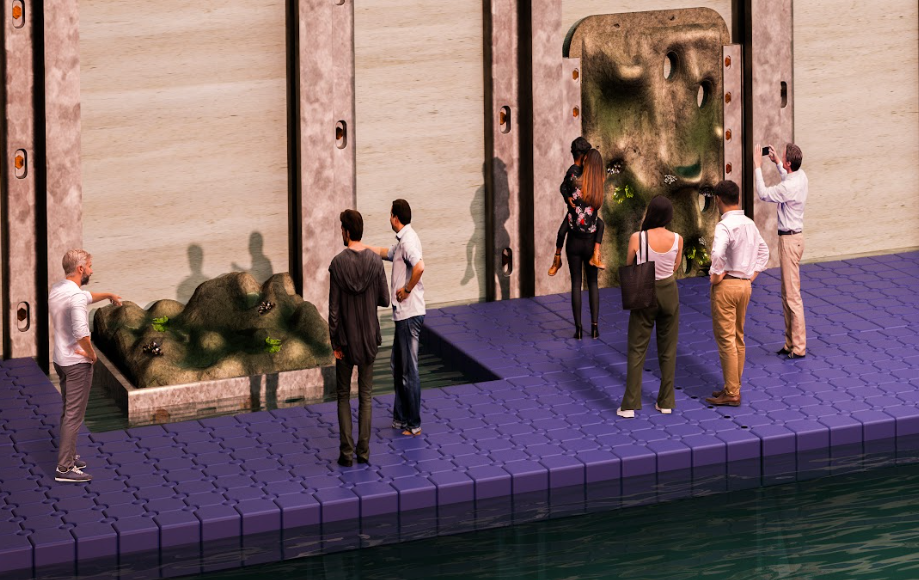
The Adaptive Living Seawall project reimagines the current seawall at the Estuary & Ocean Science Center as an organic, living system that supports marine biodiversity, coastal resilience, research, and public engagement. Traditional vertical seawalls create harsh environmental conditions with limited habitat opportunities for marine organisms while reducing accessibility for ecological monitoring and interaction. Simultaneously, climate change continues to endanger native ecosystem within the San Francisco Bay. In response, the project introduces modular habitat panels mounted onto a vertical rail system that allows the structure to adapt to changing tides and water levels while creating textured microhabitats for oysters, mussels, algae, and other suspension feeders. Using shell-enhanced marine concrete, 316 stainless steel, and buoyancy-controlled HDPE floats, the system is designed to improve biodiversity, encourage ecological growth, and support long-term marine resilience. Moving forward, the next steps include refining the tidal adaptation system, improving the floating dock integration, testing material performance and fabrication methods, and developing stronger strategies for ecological monitoring, maintenance, and public interaction.
Faculty Lead:
Fernando Carvalho
Students:
Vivack Chan, Katalina Ruiz, Athena Valli
Collaborating Partner:
Estuary & Ocean Science Center
Aligned LA County Sustainability Plan Goals:
Goal 2: Buildings and infrastructure that support human health and resilience. Goal 5: Thriving ecosystems, habitats, and biodiversity.
Premiere Segment
Presentation Materials
← Return to Pando Days ’25/26 | Schools & Projects | All projects